Call us on +44(0)7763 572224


Long-Assignment Burnout: How the Right Serviced Accommodation Helps UK Assignees Cope

A long assignment, three months or more, looks attractive on paper: a new city, a stretch role, a step up. In practice, it can quietly break the people who take it. Not visibly. Not in the first month. But by week eight or ten, something has shifted, and most UK employers do not notice until the assignment is already in trouble.
This is what UK HR and mobility teams call long-assignment burnout. It is not the same as stress, and it is not the same as homesickness. It is a slow drift that affects performance, retention, and the assignee’s willingness to accept the next posting. The accommodation they live in is one of the few variables the employer can actually control.
This is a practical look at what long-assignment burnout really is, how UK organisations miss it, and what serviced accommodation can (and cannot) do about it.
What long-assignment burnout actually looks like
It does not announce itself. By the time an assignee describes feeling burnt out, the warning signs have been visible to everyone around them for weeks.
The pattern is consistent across the cases we have seen:
- Sleep gets shorter and less restorative. The assignee stops sleeping well by week four or five, often without noticing.
- Productivity at work stays high initially, but the personal cost of maintaining that performance grows.
- The assignee stops making an effort with the local environment. They eat at the same two restaurants, see the same few people, and stop exploring.
- Communication with home becomes either ritualistic (a Sunday call to family) or strained.
- Small frustrations at work start to feel disproportionately large. The same manager who was “good to work with” in week one is now “impossible.”
- By month three, the assignee is talking about the assignment ending early, but not formally asking to leave.
Most UK employers do not see any of this because the assignee is still hitting their KPIs. Performance management looks fine. The burnout is below the surface.
Why the accommodation matters more than people expect
In a long UK assignment, the accommodation is the only space the assignee fully controls. The office belongs to the client. The city is unfamiliar. Their social network, if they have one, is sparse. The flat is home.
When the accommodation is wrong for the assignment, every other stress is amplified. When the accommodation is right, the assignee has a base to recover in, and the rest of the assignment gets easier.
The right serviced accommodation for a long assignment is not a luxury. It is a working environment that supports sleep, privacy, autonomy, and basic recovery.
What serviced accommodation gets right
A well-managed serviced apartment delivers four things that the typical hotel cannot, and that matter disproportionately over a 12 to 16 week assignment.
Privacy and autonomy
Serviced apartments give the assignee their own front door, in many cases their own entrance, and complete control over the space. They are not sharing a corridor with strangers. They are not navigating a hotel breakfast. They are living in a flat that is theirs for the duration of the assignment.
For someone who is already coping with the unfamiliarity of a new city, that privacy is the difference between rest and constant low-grade vigilance.
Sleep quality
Serviced apartments are quieter. There are fewer guests per square metre, fewer corridor noises, fewer late-night bar sounds. The assignee controls the temperature, the lighting, and the bedtime routine. Sleep recovers within a week or two, which is when the rest of the recovery starts.
A real kitchen
Cooking is not optional over a 12 week assignment. Eating out every meal gets expensive, gets lonely, and gets unhealthy. A serviced apartment with a proper kitchen, ideally one with an oven and a dishwasher, gives the assignee the option to cook familiar food. That option matters more than people realise.
Space to live, not just sleep
A hotel room is designed for sleeping. A serviced apartment is designed for living. Over a long assignment, that distinction is everything. The assignee can host friends, work from the kitchen table on a Saturday, stretch out on the sofa. The flat becomes a home, not a bed.
Where serviced accommodation can still fail
Serviced apartments are not automatically the right answer. The wrong property can be worse than a hotel, and a few common failures are worth naming.
Properties that are not properly private
If the apartment is part of a building with shared amenities (gym, pool, concierge) that are heavily used by other guests, the noise and foot traffic undermine the privacy. For long assignments, a standalone property or one with controlled access is meaningfully better.
Properties that are far from work
A serviced apartment that is 25% cheaper but requires a 90-minute commute each way is not a saving. The commute eats into the time the assignee has to recover. For long assignments, location matters more than rate.
Properties with no proper workspace
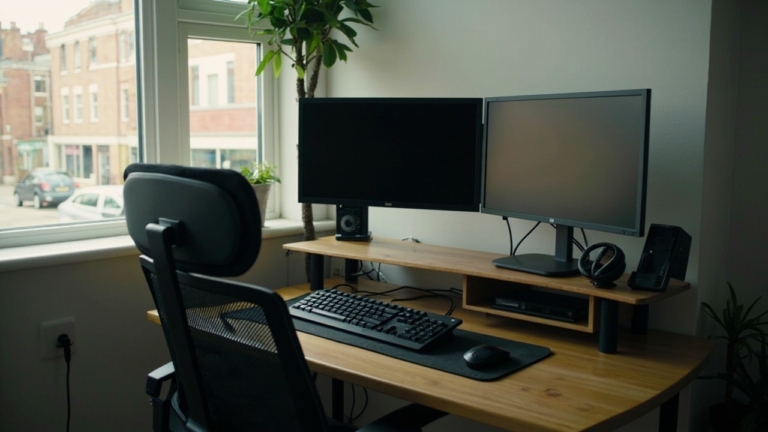
Some serviced apartments are designed for leisure guests, with a token desk in the corner of the bedroom. For someone who is on a stretch assignment, that is not enough. A real desk, a real chair, and reliable wifi are not negotiable.
Properties with housekeeping that does not respect the guest
Serviced apartments include housekeeping, but for long-stay guests, the schedule needs to be flexible. The assignee should be able to opt out of any given clean, or to reschedule without it becoming a negotiation. A property that is rigid on this is not the right property for a 12 week stay.
How to spot burnout before it becomes a problem
The accommodation helps, but it does not prevent burnout on its own. UK organisations that take long assignments seriously run a structured check-in process.
A simple version looks like this:
- A welfare call at the end of week one. Just to confirm the assignee has settled.
- A check-in at week four. Any issues with the property, the city, the work, surfaced early.
- A formal review at week eight. Real conversation about how it is going.
- A mid-point review at week twelve. Decision point: extend, rotate, or bring home.
- A wind-down conversation in the final two weeks. Practical, not emotional.
This is not expensive. A 30-minute call every four weeks, from someone who is not the assignee’s line manager, catches most of the cases before they escalate.
The accommodation provider can support this process. A good provider will have a named contact who knows the property and the guest, and who can flag concerns early. If the provider does not have that, the employer is doing the welfare work without the on-the-ground support.
What employers should be looking for
If you are placing UK employees on long assignments in 2026, the accommodation brief should look like this:
- A standalone property, or one with controlled access, in a quiet location.
- Within a reasonable commute of the office (30 minutes is a useful upper limit).
- A proper kitchen, a proper desk, and reliable wifi.
- A provider who will agree to a flexible housekeeping schedule.
- A named contact for the duration of the assignment, not a call centre.
These are not expensive requirements. Most corporate-focused serviced apartment providers will deliver them as standard. The work is in the specification, not the booking.
The honest limits
There is a limit to what accommodation can do. Burnout is driven by the work, the isolation, the distance from home, and the assignee’s own coping resources. A serviced apartment does not fix the work or the isolation. What it does is remove one of the most common aggravating factors, which is the daily experience of living in a space that does not feel like home.
For organisations that take long assignments seriously, that is enough of a reason to insist on serviced apartments for any stay of more than a few weeks. It is not a luxury. It is part of the duty of care.
The takeaway
Long-assignment burnout is real, common, and expensive. Most UK employers do not see it coming because the assignee is still hitting their KPIs. The accommodation is one of the few variables the employer can control, and the right serviced apartment gives the assignee a base to recover in.
For any UK long assignment of more than four weeks, the serviced apartment should be the default. Hotels are for short stays. The rest of the work is in the welfare check-ins, the workload, and the assignee’s own support network. None of that is the accommodation provider’s job. But giving the assignee a place to live properly, rather than a place to sleep badly, is.
Internal links
- Corporate housing services
- About Topstay and how we work with corporate accounts
- Get in touch about a corporate programme
Sources
- CIPD, Managing Long-Stay Assignments: A Practical Guide, 2024, https://www.cipd.org/uk
- Cigna, 2024 Global Workforce Mental Health and Burnout Report, https://www.cigna.com
- World Health Organization, Burn-out an Occupational Phenomenon, 2019, https://www.who.int
- Deloitte, 2024 Gen Z and Millennial Survey: Burnout and Workplace Culture, https://www.deloitte.com
- BCD Travel, 2025 Corporate Travel Outlook, https://www.bcdtravel.com/resources/blog/2025-travel-outlook
- International SOS, 2024 Duty of Care Benchmark Report, https://www.internationalsos.com
- GBTA Foundation, Corporate Travel Risk Management Standards, 2024, https://www.gbta.org/foundation
- Topstay.uk internal data on long-assignment guest outcomes in serviced accommodation vs hotels, anonymised, 2024 to 2025